

Why Lab Grown Diamond Nose Pins Are Becoming the First Choice of Modern Women
A diamond nose pin used to be a once-in-a-lifetime purchase. That's changed. More women now want a real diamond they can wear every single day, to the office and to a wedding alike, without paying mined-diamond prices or worrying about where the stone came from. Lab grown diamond nose pins solve all three problems at once: affordability, sustainability, and genuine luxury you don't have to lock away.
This guide answers the questions buyers actually ask, compares the real choices side by side, and shares what tends to work for first-time buyers. Each section opens with a direct answer, so you can skim or read in full.
What Is a Lab Grown Diamond Nose Pin?
A lab grown diamond nose pin is a nose ornament set with a diamond created in a laboratory rather than mined, then mounted in gold as a stud, screw, or ring. The diamond is real, not an imitation. It shares the same chemical, physical, and optical properties as a mined diamond. The only difference is origin.
The stone is grown using one of two proven methods. High Pressure High Temperature (HPHT) recreates the heat and pressure found deep in the earth. Chemical Vapour Deposition (CVD) builds the crystal layer by layer from a carbon-rich gas. Both produce a true diamond, scoring 10 on the Mohs hardness scale.
Here's the part first-time buyers most often get wrong: a lab grown diamond is nothing like cubic zirconia or moissanite. Those are simulants. A lab grown diamond is carbon in the same crystal lattice as a mined one, so it behaves like a diamond in every way that matters.
Are Lab Grown Diamonds Real Diamonds?
Yes. Lab grown diamonds are real diamonds with the same chemical, physical, and optical properties as mined diamonds. They are graded by the same independent labs, score the same hardness, and reflect light identically. The only difference is that one grew in a lab and the other grew underground. Neither is "fake."
This matters for a nose pin specifically. Because the stone sits close to the skin and gets seen up close, people sometimes assume a lab grown stone won't hold up. It does. The hardness is identical, so it resists scratching exactly as well as a mined diamond.
Why Are Women Choosing Lab Grown Diamond Nose Pins?

Women are choosing lab grown diamond nose pins because they get the same look and durability for a lower price, with ethical sourcing and certification included. For a small piece worn daily, that combination is hard to beat. You can wear something beautiful without anxiety about cost, sourcing, or losing an heirloom.
The reasons break down into five clear advantages.
Better Value for Money
Lab grown diamonds skip the long, costly mining and supply chain, so they generally cost considerably less than mined diamonds of similar size and grade. For a nose pin, that often means choosing a slightly larger or higher-clarity stone for the same budget. Your money simply goes further, with no visible drop in quality.
Same Sparkle and Beauty
Sparkle comes from how a diamond bends and returns light, which depends on its structure and cut, not its origin. Since lab grown diamonds share the identical structure, a well-cut lab grown stone sparkles exactly like a mined one. Nobody glancing at your nose can tell the difference, and most jewellers can't either without lab equipment.
Ethical and Conflict-Free
Lab grown diamonds sidestep the sourcing concerns tied to some mined diamonds, including questions about labour conditions and conflict origins. For buyers who care where their jewellery comes from, this is often the deciding factor. You get the diamond you want with a clearer conscience.
Sustainable Choice
Mining moves huge volumes of earth. Lab grown diamonds are made in a facility with a far smaller physical footprint and no large-scale extraction. Energy use varies by producer, but for women trying to shop more sustainably, lab grown is a sensible option that doesn't force a trade-off between beauty and values.
Certified Authenticity
A diamond is only as trustworthy as its paperwork. Reputable lab grown nose pins come with grading from independent institutes. IGI is currently the most widely used grader for lab grown diamonds and assesses the standard 4Cs. GIA is a long-respected name that now grades lab grown stones too. A certificate confirms cut, colour, clarity, and carat independently of the seller.
How Much Does a Diamond Nose Pin Cost?
A diamond nose pin's price depends on five things: diamond size, gold purity, craftsmanship, certification, and design complexity. A small certified lab grown stud is usually the most accessible entry point into fine diamond jewellery, while clusters and larger stones cost more. Rather than chasing the lowest sticker, compare pieces across those five factors to judge fair value.
Here's how each factor moves the price:
- Diamond size. Larger carat weight costs more, though for a nose pin the stones are small to begin with, so the gaps are modest.
- Gold purity and weight. A heavier setting or higher-karat gold raises the price.
- Craftsmanship. A clean, secure, comfortable setting reflects more skilled work.
- Certification. Independent grading adds a little cost and a lot of confidence.
- Design complexity. A floral cluster involves more material and labour than a single solitaire.
A quick word on a question I hear constantly: am I overpaying? You're overpaying only if you're paying mined-diamond prices for the lab grown look without the certificate to back it up. With an independent report in hand and these five factors understood, you can tell a fair price from an inflated one.
Lab Grown vs Natural Diamond Nose Pin
On everything you can see and feel, lab grown and natural diamonds match. They differ on price, sourcing, and environmental impact, and on each of those, lab grown tends to suit the everyday buyer better. For a piece worn daily, the lab grown case is especially strong because you get identical durability and looks for less.
| Feature | Lab Grown Diamond | Natural Diamond |
|---|---|---|
| Price | Generally lower for comparable quality | Generally higher |
| Durability | 10 on Mohs scale | 10 on Mohs scale |
| Appearance | Identical to the eye | Identical to the eye |
| Maintenance | Simple soap-and-water cleaning | Simple soap-and-water cleaning |
| Daily wear suitability | Excellent | Excellent |
| Certification | IGI / GIA graded | IGI / GIA graded |
| Sustainability | Smaller extraction footprint | Involves large-scale mining |
Solitaire vs Floral Nose Pin
A solitaire is a single diamond and reads as classic, versatile, and understated. A floral or cluster design groups smaller stones for more visible presence and an ornamental, festive feel. For daily and office wear, most women reach for a solitaire. For functions, gifting, and traditional outfits, a floral design tends to win.
| Feature | Solitaire | Floral / Cluster |
|---|---|---|
| Price | Lower at the same total carat | Often higher due to detail |
| Durability | Very secure, fewer snag points | Slightly more delicate setting |
| Appearance | Clean and timeless | Ornamental and eye-catching |
| Maintenance | Easiest to clean | More crevices to clean |
| Daily wear suitability | Best for everyday | Best for occasions |
In my experience helping people choose, first-time buyers almost always end up happiest with a solitaire. It's the piece they forget they're wearing, and it goes with everything. The floral designs get chosen as gifts and for women who already own a daily stud and want something dressier.
14K Gold vs 18K Gold Nose Pin
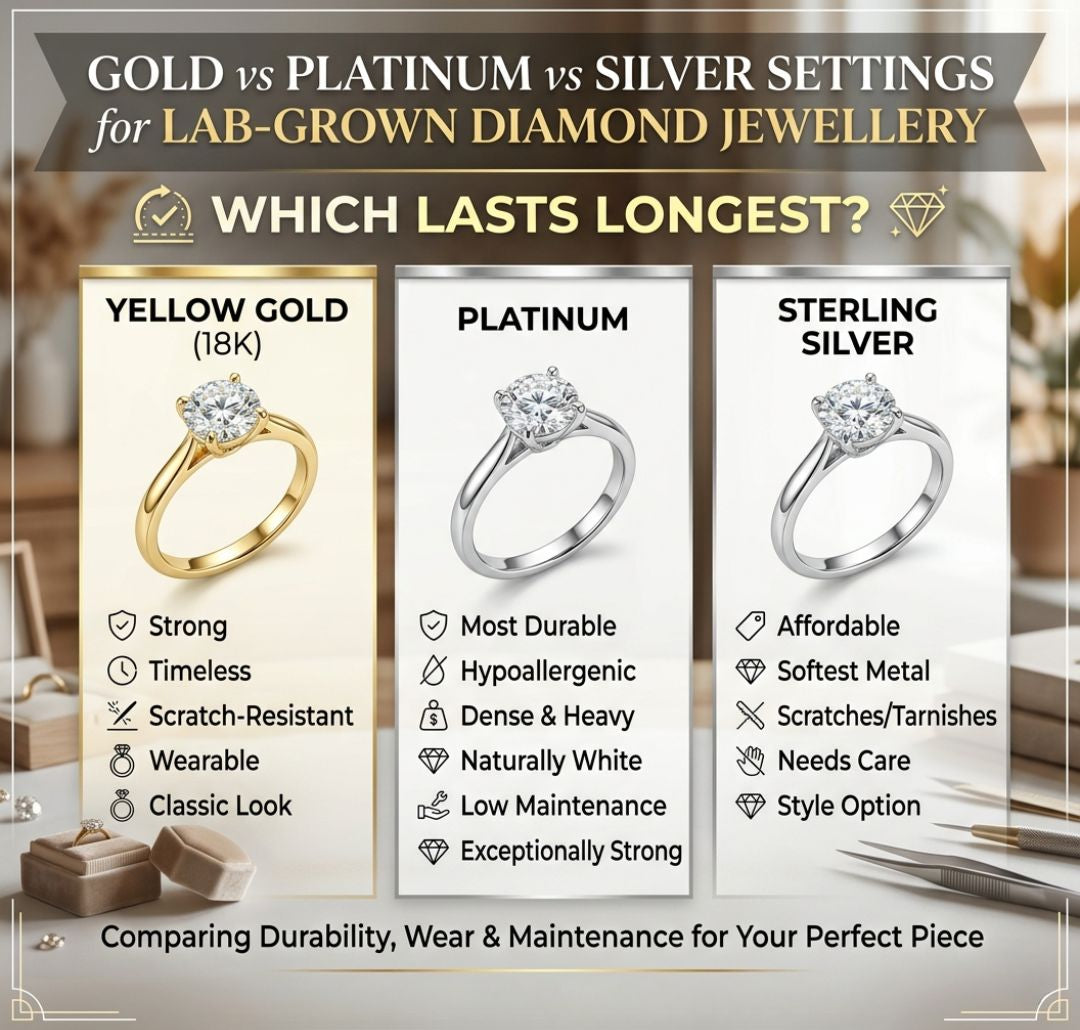
For a daily wear nose pin, 14K gold is usually the more practical choice, and 18K is the more luxurious one. 14K contains less pure gold, making it harder and more scratch-resistant, while 18K has a richer colour but is softer. Neither is "better" outright; it depends on whether you prioritise durability or purity.
| Feature | 14K Gold | 18K Gold |
|---|---|---|
| Gold purity | 58.5% | 75% |
| Price | Lower | Higher |
| Durability | Harder, more scratch-resistant | Softer, scratches more easily |
| Appearance | Slightly paler tone | Richer, warmer tone |
| Daily wear suitability | Excellent for constant wear | Better for occasional or careful wear |
My honest take: for a nose pin you'll wear day and night and rarely remove, 14K is the smarter pick. The slight loss in gold richness is more than worth the gain in toughness on a piece that lives on your face.
How to Choose the Right Women's Diamond Nose Pin
Choose based on fit, not price. The right nose pin matches your face, your routine, and how often you'll wear it, not the size of the stone. A modest, well-cut solitaire in a secure setting suits most women for daily wear, while larger or floral designs work best for occasions. Comfort and a secure back matter more than carat weight.
Use this quick decision framework:
- Daily wear or occasional? Daily points to a small secure stud; occasional allows a larger or floral piece.
- Office dress code? Conservative settings favour a subtle solitaire.
- Sensitive skin? Choose your metal carefully and prioritise a comfortable, well-finished post.
- Gold preference? Yellow for warm and traditional, white for cool, rose for soft. 14K for toughness, 18K for richness.
- Budget priority? Let the lab grown saving buy a better clarity or simply keep cash in your pocket, rather than chasing maximum size.
Common mistakes I see: buying too large a stone for the nose, where it overwhelms rather than flatters; skipping the certificate to save a little; and choosing a fiddly back that's hard to secure for everyday use. Avoid those three and you'll be happy.
Popular Lab Grown Diamond Nose Pin Styles
The best style is the one that fits your daily life, and a few designs cover most needs. Solitaires are the everyday workhorses, while floral and star designs add presence for occasions and gifting. Below are four worth knowing, each suited to a different look and routine.

Trinity Petal Nose Pin uses a soft floral cluster for a little extra presence. It's a lovely pick for festive days, family functions, and anyone who likes ornamental jewellery. Pair it with traditional wear, or use it to lift a plain outfit. This is a design people often choose as a gift.

Radiant Star Nose Pin centres on a bright, contemporary sparkle. It gets noticed without being large, so it bridges subtle and statement nicely. It handles both daily wear and evenings out, which makes it a flexible second piece.

Petal Essence Nose Pin keeps the floral idea in a lighter, more delicate form. Because it's understated, it's an easy everyday companion that pairs with office and casual looks alike. Choose it if you prefer refined over flashy.

Floating Solitaire Nose Ring gives the classic single-diamond look in a ring format, the stone appearing to float against the skin. It's timeless and versatile, the one piece that goes with everything. For first-time buyers, a solitaire like this is hard to outgrow.
What Buyers Worry About Before Purchasing
Most hesitation comes down to a handful of honest concerns. Here they are, answered plainly.
Is this a smart purchase? For daily wear, yes. You get a real, certified diamond with identical durability and looks for less money. Just don't buy it expecting financial appreciation.
Am I overpaying? Not if you have an independent certificate and understand the five price factors. Those let you compare like for like and spot inflated pricing.
Will it look expensive? Yes. A well-cut lab grown diamond reads as exactly what it is, a diamond. Cut quality matters more than carat for that "expensive" sparkle.
Can people tell it's lab grown? No. Even jewellers usually can't without lab equipment. The difference shows only in grading reports and laser inscriptions, never to the eye.
Will it last for years? It'll last a lifetime. At 10 on the Mohs scale, it's the hardest material in jewellery and shrugs off everyday wear.
Is certification important? Very. The certificate is your independent proof of quality and the single best protection for your purchase.
Which design is safest for daily wear? A small solitaire in a secure screw-back. It resists snagging and stays put.
Are Lab Grown Diamond Nose Pins Worth Buying?
For most women shopping today, yes, with one caveat. You get a real, certified diamond with the same look and durability as a mined one, usually for less, plus ethical and environmental advantages. For something worn daily, that's genuinely excellent value. Buy it to wear and enjoy, not as an investment.
The caveat is resale expectations. Fine jewellery, lab grown or mined, generally shouldn't be treated as a financial asset, and lab grown prices have been trending downward as production scales up. So the smart frame is simple: this is everyday luxury you'll actually use, and on those terms it delivers.
Frequently Asked Questions
Are lab grown diamond nose pins real diamonds? Yes. A lab grown diamond is chemically, physically, and optically identical to a mined diamond. It's genuine carbon in the same crystal structure, simply grown in a lab. It is not a simulant like cubic zirconia or moissanite, and it's graded by the same independent institutes.
How long do lab grown diamonds last? Effectively forever. They score 10 on the Mohs hardness scale, the same as mined diamonds, making them the hardest material used in jewellery. With basic care, a lab grown diamond nose pin will look the same decades from now as it does today.
Can anyone tell the difference between lab grown and natural? No, not by looking. Even experienced jewellers usually can't distinguish the two without specialised equipment. The difference appears only in detailed grading reports and laser inscriptions, never to the naked eye, so your nose pin reads simply as a diamond.
Is a lab grown diamond nose pin suitable for daily wear? Yes. Its hardness resists scratching, and a secure screw-back keeps it in place through everyday activity. A modest stone size also reduces snagging. For women who rarely remove their nose pin, lab grown is an ideal daily-wear choice.
How much does a diamond nose pin cost? It varies with diamond size, gold purity, design, and certification, so a single figure would mislead. Compare pieces across those factors rather than by sticker alone. A small certified lab grown stud is generally the most accessible entry point into fine diamond jewellery.
Are lab grown diamond nose pins certified? Reputable ones are. Independent institutes such as IGI and GIA grade lab grown diamonds on the same 4Cs used for mined stones. IGI is currently the most widely used grader for lab grown diamonds. Always insist on an independent certificate before buying.
Which gold is best for a women's diamond nose pin? It depends on preference and lifestyle. Yellow gold is warm and traditional, white is cool, rose is soft. For constant daily wear, 14K is harder and more scratch-resistant than 18K, while 18K offers a richer colour for occasional or more careful wear.
Is a nose pin better in 14K or 18K gold? For daily wear, 14K is usually the more practical choice because it's harder and resists scratches. 18K contains more pure gold and has a richer tone but is softer. Choose 14K for toughness and value, 18K for purity and colour.
Are lab grown diamonds a good investment? They're a good purchase, not an investment. Like most fine jewellery, they should be bought to wear and enjoy. Prices have generally been falling as production grows, so don't expect appreciation. Buy for beauty and everyday value rather than resale.
Do lab grown diamonds sparkle more than natural ones? No, they sparkle the same. Sparkle depends on crystal structure and cut quality, both identical between lab grown and mined diamonds. A well-cut lab grown stone and a well-cut mined stone of the same grade look indistinguishable in brilliance.
Does the growth method (HPHT or CVD) affect quality? No. Both HPHT and CVD produce chemically identical diamonds. Quality is determined entirely by the 4Cs, cut, colour, clarity, and carat, not by the growth method. Focus on the grading report rather than how the stone was made.
Is a diamond nose piercing safe for everyday use? Yes, once the piercing has healed and you use a well-fitted, good-quality piece. A secure setting and comfortable post reduce irritation. If your skin is sensitive, choose your metal carefully and keep the area clean as part of normal hygiene.
How do I care for a lab grown diamond nose pin? Care is simple. Wipe it occasionally with mild soap and warm water to remove oils, then dry it gently. Avoid harsh chemicals, and store it separately so it doesn't scratch other jewellery. Its hardness means routine daily wear poses little risk.
Can I wear a lab grown diamond nose pin to a wedding or formal event? Yes, and many women do. A solitaire or small cluster looks elegant and dressy while staying understated enough for daily life. That versatility is a big part of the appeal: one piece that moves easily from the office to a celebration.
Why choose lab grown over natural for a nose pin specifically? Because the stone is small and worn daily, the lower price lets you buy a better grade or save money, the durability handles constant wear, and the ethical, sustainable sourcing fits how many women shop now. For an everyday piece, lab grown makes especially good sense.