
Article: 14K vs 18K Gold for Lab Grown Diamond Rings: Which to Choose
14K vs 18K Gold for Lab Grown Diamond Rings: Which to Choose
Choosing between 14K and 18K gold is one of the first decisions most buyers face when they shop for a lab grown diamond ring. Both are genuine gold, both are widely worn in India, and each has clear strengths. The right choice depends on how often the ring will be worn, what colour you prefer, and what fits your budget. This guide explains the difference between 14K and 18K gold, how each performs in diamond jewellery, and how to decide which one suits you.
What Is the Difference Between 14K and 18K Gold?
Karat measures how much of a metal is pure gold, counted in 24 parts. Pure gold is 24K, which is too soft to hold a diamond securely, so jewellers mix it with other metals called alloys.
- 14K gold has 14 parts gold out of 24. In India it is hallmarked as 14K585, where 585 means 58.5% pure gold.
- 18K gold has 18 parts gold out of 24. It is hallmarked as 18K750, where 750 means 75% pure gold.
The alloy gives gold its strength and affects its colour. Because 14K has more alloy, it is harder and resists bending and scratching better. Because 18K has more gold, it is softer but shows a richer yellow and carries more metal value.
| Feature | 14K Gold | 18K Gold |
|---|---|---|
| Gold purity | 58.5% | 75% |
| Alloy content | 41.5% | 25% |
| Durability | Generally more resistant to everyday wear | Generally softer |
| Gold appearance | Depends on alloy and colour | Depends on alloy and colour |
| Price | Generally more affordable | Generally more expensive |
14K vs 18K Gold Diamond Ring: Which Is More Durable?
Durability matters most for a ring worn every day. Rings knock against hard surfaces, get exposed to soap and lotion, and rub against other jewellery. Because 14K contains more alloy, it resists scratches, dents and bending better than 18K. That is why 14K is often recommended for engagement and wedding bands worn daily.
The metal is only part of the picture. Several other factors affect how a ring holds up:
- Band thickness: A thicker, well-built shank resists bending better than a very thin one, whatever the karat.
- Prong security: The prongs that hold the diamond need to stay firm. Worn or loose prongs can let a stone loosen, so check them periodically.
- Setting design: Protective designs such as bezels suit active wearers, while very delicate settings need more care.
- Craftsmanship: A well-finished piece handles everyday wear better than a poorly made one.
An 18K ring that is well designed and carefully worn can last for years. A thin 14K ring with weak prongs may not. Durability comes from the whole piece, not the karat alone.
14K vs 18K Gold: Which Colour Should You Choose?
Neither karat is objectively more beautiful. Appearance depends on the alloy mix and the colour you prefer.
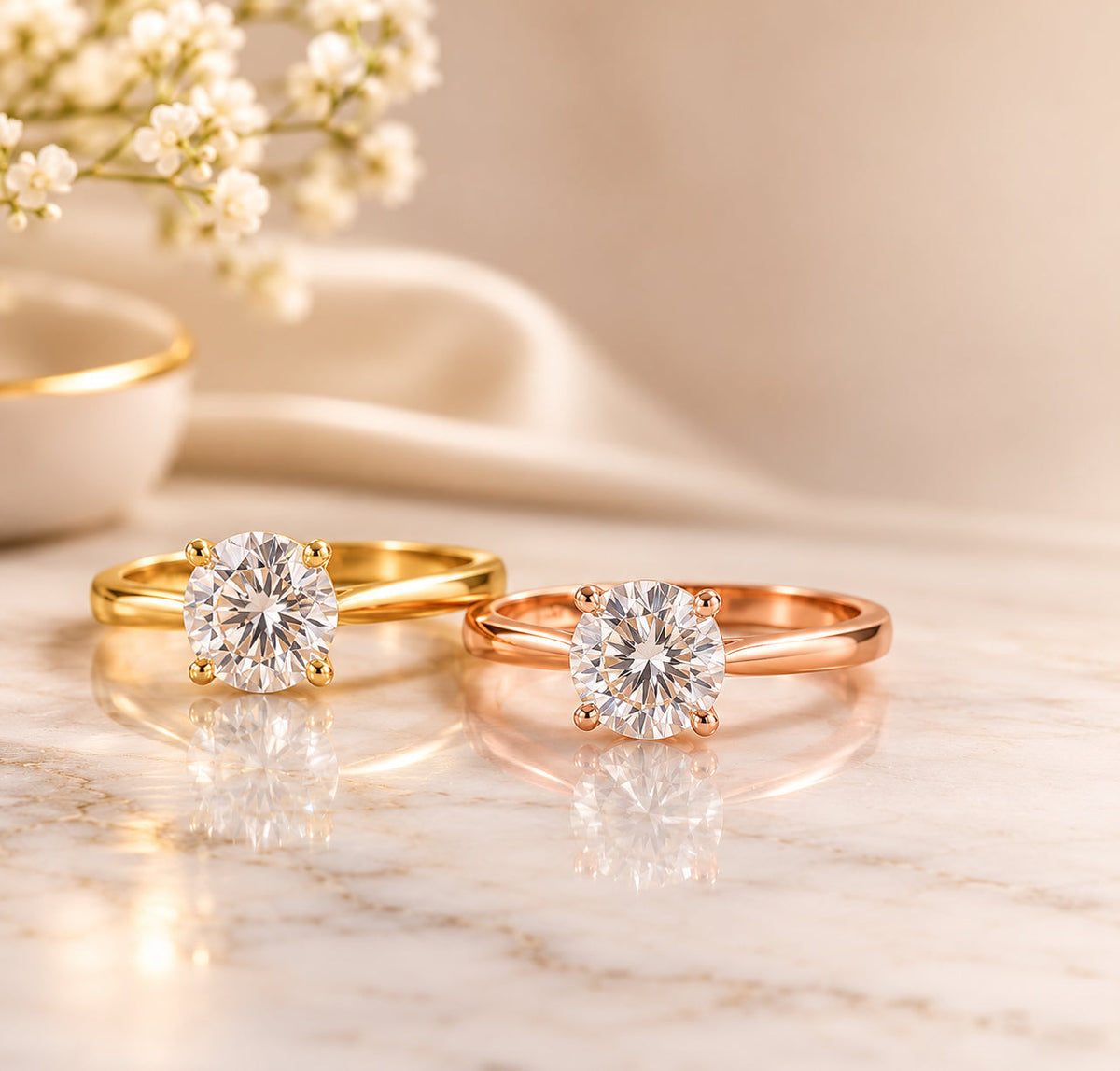
Yellow gold is the traditional choice. 18K yellow gold has a deeper, warmer tone because of its higher gold content. 14K yellow gold looks slightly paler and can appear more muted in some lighting.
White gold is made by mixing gold with white metals, then coating it with rhodium, a bright white metal from the platinum family. Rhodium gives white gold its mirror-like shine. With daily wear, the plating slowly thins over one to two years, and a slightly warm tone can show through. Re-plating is a quick service that restores the original finish. Because the underlying metal is the same, the karat affects the warmth that appears after the plating wears off, with 18K tending to look a little warmer.
Rose gold gets its pink tone from copper in the alloy. 14K contains more alloy, so its rose colour often looks stronger, while 18K looks softer and more subtle.
The final shade depends on the manufacturer's alloy recipe, so two 14K pieces can look slightly different. Always compare the actual piece in good light rather than relying on the karat label.
Is 14K or 18K Gold Better for Lab Grown Diamond Jewellery?
Lab grown diamonds have the same physical, chemical and optical properties as mined diamonds. The gold karat does not change the diamond's colour, clarity, cut or carat weight. Those qualities are judged on the stone itself, so the gold decision mainly affects the setting's strength and look.
Here is how each option typically suits different pieces:
- Engagement rings: 14K suits a ring worn every day. 18K suits buyers who want a richer colour and are comfortable with a little more care.
- Wedding bands: 14K is a practical choice for a band you never take off, though 18K is also popular for its warm tone.
- Diamond earrings and pendants: These face less daily knocking than rings, so 18K is often chosen for its colour and finish.
- Everyday diamond jewellery: 14K is generally the more practical option for pieces worn daily.
How to Check Gold Purity: BIS Hallmark and HUID
In India, gold jewellery is hallmarked under the Bureau of Indian Standards (BIS). A BIS hallmark usually includes three elements:
- The BIS logo
- The purity mark, such as 14K585 or 18K750
- A six-digit alphanumeric HUID, which is a unique code for each piece
You can check a HUID through the BIS Care app, which lets you confirm the piece's details. Before you buy, ask the seller for the hallmark details in writing and make sure they match the purity you were quoted. Confirm this with the seller for every piece you consider, since hallmarking and certification can vary by product.
14K vs 18K Gold Price in India
18K gold jewellery generally costs more than 14K because it contains more pure gold, and gold is the most valuable component of the piece. The final price depends on several factors:
- Current gold rates: These change daily, so check the live rate at the time of purchase.
- Jewellery weight: Heavier pieces contain more metal.
- Diamond carat weight and quality: The stones often form a large share of the total cost.
- Making charges: Design complexity and craftsmanship add to the price.
- Brand pricing: Retail margins and service levels vary between sellers.
For illustration only, a 14K and 18K version of the same design and weight would differ mainly by the gold content, so the 18K version costs more. Always get a current quotation from the seller rather than relying on general estimates.
Maintenance: How 14K and 18K Gold Age Over Time
Both karats need basic care, but the care differs slightly.
- Clean gently: Use lukewarm water, mild soap and a soft brush. Dry the ring thoroughly.
- Remove rings during heavy work: Gardening, cooking with abrasive cleaners and gym workouts can all scratch or dent gold.
- Keep it separate: Store rings apart from other jewellery to avoid scratches.
- Check the prongs: Have a jeweller check the setting every few months, especially on rings worn daily.
- Re-plate white gold: When the white finish fades, re-plating restores the shine.
14K needs less attention for scratches, while 18K can look richer for longer if you are willing to clean it a little more often.
Pros and Cons of 14K and 18K Gold
14K gold
- Advantages: Harder and more scratch-resistant, more affordable, holds its shape well for everyday rings.
- Limitations: Slightly lighter yellow tone and less gold content, so lower metal value.
18K gold
- Advantages: Richer, warmer colour, higher gold content, often preferred for a luxurious finish.
- Limitations: Softer and more prone to scratches and dents, and more expensive.
How to Choose Between 14K and 18K Gold for Your Diamond Ring
Start with how the ring will be worn:
- For daily wear, such as an engagement or wedding ring you never take off, 14K offers the best balance of strength and value.
- For occasional wear, such as a pendant, earrings or a special-occasion ring, 18K's colour may suit you better.
- If your budget is limited, 14K lets you put more of the spend into the diamond's size or quality.
- If you prefer a specific colour, compare both options in person and choose the shade you like best.
- If you want low maintenance, 14K generally needs less attention.
You can compare designs, gold options and diamond specifications across The6C's Lab Grown Diamond Rings and Engagement Rings collections before you decide.
Frequently Asked Questions
Is 14K or 18K gold better for a diamond ring?
Neither is better in every case. 14K is harder and suits everyday wear, while 18K has a richer colour and higher gold content.
Is 14K gold good for lab-grown diamond jewellery?
Yes. The gold does not affect the diamond's quality, and 14K is a practical choice for pieces worn daily.
Does 18K gold scratch more easily than 14K gold?
Generally, yes. 18K contains more pure gold, which is softer, so it is somewhat more prone to scratches and dents.
What does 585 or 750 mean on gold?
These are fineness marks. 585 means 58.5% pure gold (14K), and 750 means 75% pure gold (18K). Both appear in the BIS hallmark alongside the karat.
Does white gold lose its colour?
White gold is coated with rhodium. Over one to two years of daily wear, the coating can thin and show a slightly warm tone. Re-plating restores the bright white finish.
Which gold is better for an engagement ring?
Many buyers choose 14K for daily wear. 18K suits those who prefer its colour and are willing to clean and check the ring a little more often.
Is 18K gold worth the extra cost?
It depends on your priorities. If you want a deeper colour and more gold content, it may be worth it. If durability and value matter more, 14K is often the better buy.
Final Thoughts
The choice between 14K and 18K gold is a trade-off between strength and colour. 14K offers durability and value, which suits everyday diamond jewellery. 18K offers a warmer tone and higher gold content, which suits pieces worn with a little more care or for special occasions. For lab grown diamonds, the stone's quality is the same in either setting, so the decision rests on how you plan to wear the ring, your budget and your colour preference.
Before you buy, look at the hallmark, compare designs in both golds, and check the diamond specifications side by side.